Estimated reading time: 4 minutes
Owning a swimming pool in Phuket comes with unique advantages, but it also requires a different maintenance mindset, especially during the rainy season. Many homeowners are surprised by how quickly pool water can change once the rains begin. Cloudy water, algae growth, and equipment issues become more common if maintenance routines are not adjusted.
This guide explains why pool maintenance during rainy season in Phuket is different, what problems typically appear, and how villa owners in areas like Rawai, Chalong, Kata, Karon, and Phuket Town can keep their pools stable and safe year-round.
Why rainy season affects pools so strongly in Phuket
Phuket’s rainy season brings heavy downpours, high humidity, and frequent storms. While rain may look harmless, it significantly affects pool water chemistry and overall stability. Rainwater dilutes chlorine, shifts pH levels, and introduces contaminants such as dust, soil, and organic debris.
Pools located in outdoor environments, especially in residential villa areas like Rawai and Chalong, are exposed directly to these conditions. In coastal areas such as Kata and Karon, strong winds can also blow sand and debris into the pool. Even pools in Phuket Town are affected by sudden rain and runoff.
Because of this, standard maintenance routines often need adjustments during rainy months.
Common pool problems during rainy season
Water turning cloudy or green
One of the most common issues during rainy season is sudden water discoloration. Rain dilutes chlorine levels, allowing algae to grow quickly. Warm temperatures combined with moisture create ideal conditions for algae to spread on pool walls and floors.
Without timely intervention, clear water can turn green within days.
Chemical imbalance
Rainwater changes the balance of pH and alkalinity. Even pools that were properly balanced before a storm may become unstable afterward. This makes regular testing especially important during rainy periods.
Skipping chemical checks during this season often leads to recurring problems.
Increased debris and organic matter
Leaves, branches, soil, and plant debris enter pools more frequently during storms. Once organic matter settles in the water, it feeds algae growth and places extra strain on filters.
This is particularly common in garden-heavy areas such as Rawai and Chalong.
Strain on pool equipment
Rainy season means pumps and filters work harder. Increased debris clogs baskets and filters faster. If circulation is reduced, water quality drops quickly.
Equipment that is already aging or poorly maintained often fails during this period.
Why regular cleaning becomes more important during rain
During rainy season, regular pool cleaning is not optional. Skimming the surface removes debris before it sinks. Brushing walls prevents algae from attaching to surfaces. Vacuuming removes dirt and organic matter that cloud the water.
In Phuket’s climate, missing even one scheduled cleaning during rainy months can result in noticeable water issues. This is why many villa owners increase monitoring frequency during this time of year.
Adjusting pool maintenance routines for rainy season
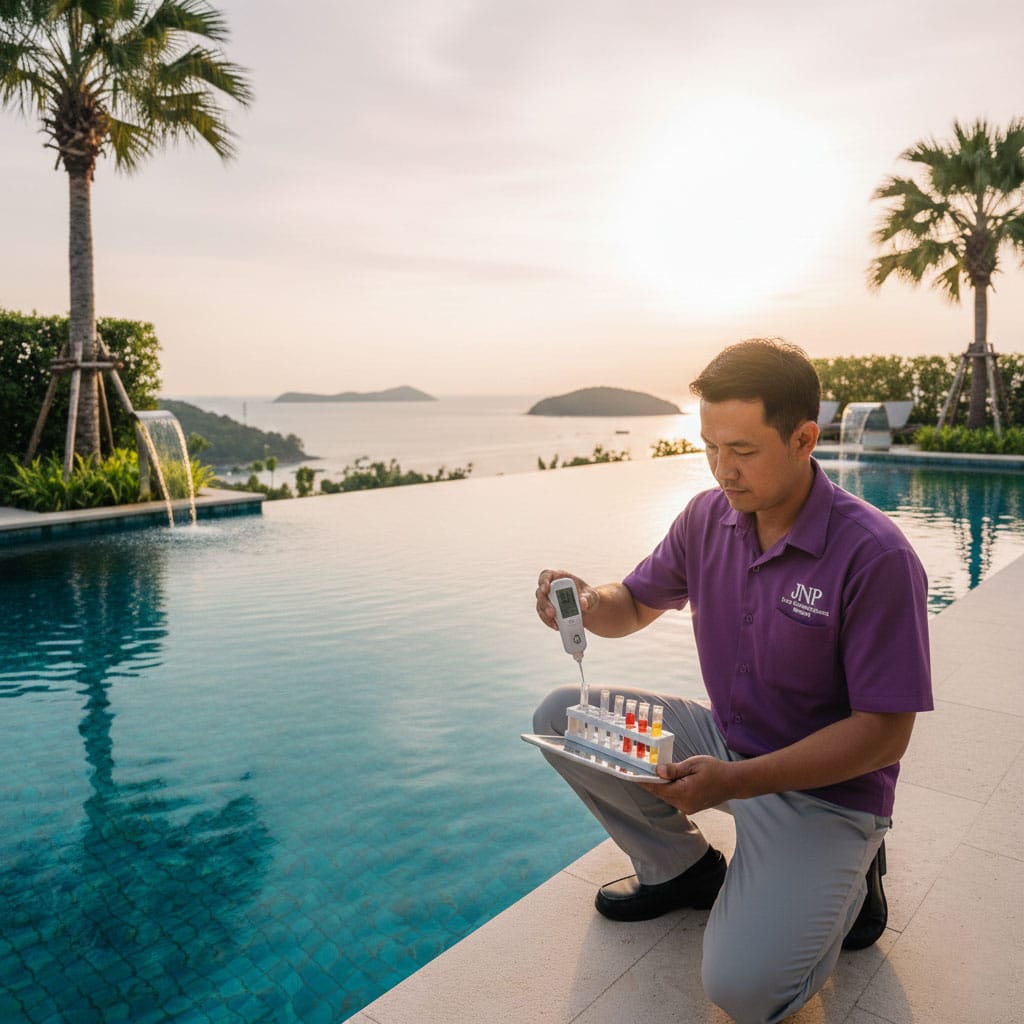
More frequent water testing
Water chemistry can change rapidly after rain. Testing water more often allows quick corrections before problems become visible. This is especially important for villas that rely on outdoor pools year-round.
Extended filtration time
After storms, running filtration systems longer helps remove contaminants and restore clarity. Proper circulation prevents stagnant areas where algae can grow.
Post-storm inspections
Checking baskets, filters, and equipment after heavy rain prevents small issues from escalating. Clearing debris early reduces strain on pumps and filtration systems.
Coordinated garden and pool care
Gardens play a role in pool cleanliness. Proper trimming, leaf removal, and drainage reduce the amount of debris entering the pool. In areas with dense landscaping, coordinating garden and pool maintenance is essential.
Challenges for villas and rental properties
Rental properties face added pressure during rainy season. Guests expect clear water regardless of weather. Any pool issues can result in complaints or cancellations.
In Rawai, Chalong, and Phuket Town, many villa owners rely on fixed weekly schedules with additional checks after storms. This proactive approach prevents emergency cleanups and protects rental income.
Consistency is key for maintaining both water quality and guest satisfaction.
When professional maintenance becomes necessary
Some signs indicate that professional help is needed during rainy season. These include recurring green water, algae returning shortly after cleaning, unusual equipment noise, or difficulty maintaining chemical balance.
Professional pool maintenance during rainy season focuses on prevention, stability, and equipment protection. Addressing issues early reduces long-term costs and avoids damage.
Long-term benefits of proper rainy season care
Pools that receive consistent care during rainy months perform better throughout the year. Equipment lasts longer, surfaces remain cleaner, and water stays more stable even during heavy weather changes.
For homeowners in Phuket, adapting maintenance routines to seasonal conditions is essential for stress-free pool ownership.
Final thoughts
Rainy season in Phuket creates challenges that cannot be ignored. Understanding how rain affects pool water, equipment, and surrounding environments helps homeowners make better maintenance decisions.
Whether a pool is located in Rawai, Chalong, Kata, Karon, or Phuket Town, adjusting care routines during rainy season is the key to keeping pools clean, safe, and enjoyable year-round.
If you have questions about pool maintenance during rainy season or need help planning the right service for your property, feel free to contact us.